


15-08-2026
admin
Son Bhandar Caves, Rajgir. The Mysterious Treasure Vault of Ancient Magadha!
Hidden at the foothills of the **Vaibhara Hills in Rajgir, Bihar**, the Son Bhandar Caves are among the most fascinating historical attractions of the ancient Magadha region. These rock-cut caves combine **religious history, ancient architecture, inscriptions and one of Rajgir's most enduring treasure legends**. ([Nalanda][1])
Known locally as **Son Bhandar or Sonebhandar**, the name itself means a **"treasury of gold."** According to popular folklore, a vast treasure belonging to the ancient Magadha ruler **King Bimbisara** was hidden somewhere behind the rock walls of these caves. Whether the treasure ever existed remains a mystery, but the legend has made Son Bhandar one of the most intriguing places to visit in Rajgir.
A Glimpse into Ancient Rajgir
Rajgir, historically known as **Rajagriha**, was an important centre of ancient Magadha. The archaeological remains of the old and new cities of Rajgir include fortifications and monuments associated with the region's Buddhist, Jain and early historic traditions. The Archaeological Survey of India describes these remains as representing the monuments of Rajgir's ancient first capital.
Against this remarkable historical backdrop stand the Son Bhandar Caves.
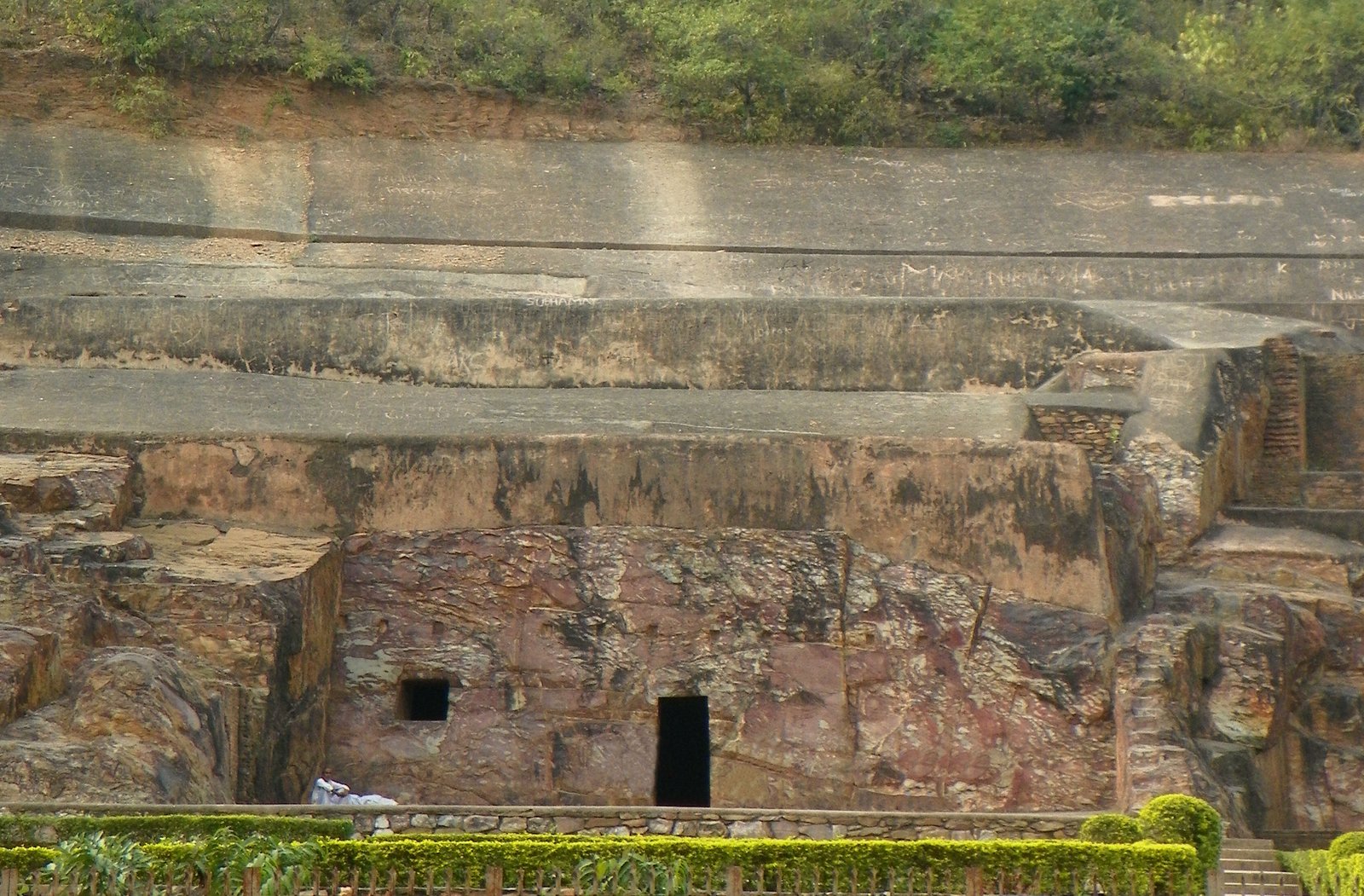
The complex consists of **two rock-cut caves** excavated into the southern face of the Vaibhara Hill. Nalanda University researchers describe them as twin caves associated with Jain ascetics.
How Old Are the Son Bhandar Caves?
This is one of the most interesting questions surrounding the monument.
The commonly cited dating places the caves around the 3rd–4th century CE, particularly because of a dedicatory inscription found at the site in Gupta script. The inscription refers to a Jain monk named Vairadeva.
However, some scholars have proposed an earlier origin, pointing to architectural similarities with the much earlier Barabar Caves and features reminiscent of Mauryan rock-cut architecture. Consequently, the exact chronology remains a subject of scholarly discussion.
This uncertainty actually adds another fascinating layer to the caves: they preserve architectural and epigraphic evidence from different historical phases.
The Jain Connection
Although popularly known for the treasure story, Son Bhandar is also an important Jain heritage site.
The inscriptions and archaeological evidence connect the caves with Jain ascetics. The Ministry of Culture's research material describes the complex as a significant Jain rock-cut site and notes inscriptions in different scripts, including Brahmi/Gupta Brahmi and other later inscriptions.
The Bihar Tourism Jain Circuit brochure also notes that figures of Jain Tirthankaras are carved inside the western cave.
For travellers interested in India's religious history, therefore, Son Bhandar is much more than a mysterious cave—it is an important window into the development of Jain traditions in ancient eastern India.
The Mystery of the Hidden Treasure
And now comes the story that has made Son Bhandar famous.
Was the treasure of King Bimbisara really hidden here?
According to local legend, King Bimbisara's enormous treasure was hidden inside the cave. The treasure was supposedly sealed behind a rock wall, and a mysterious inscription was believed to contain the secret for opening it.
The Bihar Tourism Development Corporation itself describes the popular tradition that the cave was connected with the treasury of Bimbisara and that inscriptions on the walls were believed to provide a clue to opening the hidden entrance
There is, however, no established archaeological evidence proving that a treasure chamber containing Bimbisara's wealth exists behind the rock. The treasure story should therefore be understood as a fascinating local tradition rather than established historical fact.
The Mysterious Inscriptions
One of the most intriguing features of Son Bhandar is its collection of ancient inscriptions.
A dedicatory inscription associated with the caves mentions Muni Vairadeva and the creation of caves suitable for Jain ascetics. The inscriptions have been important in attempts to understand the history and chronology of the site.
Some popular accounts also connect the site with shell-and-conch or Shankhalipi inscriptions, which have contributed to the mysterious reputation of the caves. Bihar Tourism's Rajgir information notes the popular belief that these markings contain the clue to the legendary treasure chamber.
For visitors, the inscriptions are perhaps more valuable as historical evidence than as a supposed treasure map.
Did the British Try to Find the Treasure?
The legend became so powerful that treasure hunters reportedly attempted to break through the rock.
Historical and archaeological documentation records a tradition that an attempt was made during the British period to blast open the supposed sealed entrance in search of treasure. The attempt did not reveal the legendary wealth, and the story subsequently became part of Son Bhandar's enduring folklore.
Today, the supposed "treasure door" remains one of the most talked-about features of the site.
Architecture of Son Bhandar
The caves are relatively simple compared with some of India's grander rock-cut monuments, but their design is historically significant.
The principal cave has a rectangular interior, vaulted/pointed ceiling and a distinctive trapezoidal entrance. Its form has been compared with the earlier Barabar rock-cut caves.
The caves were carved directly into the hill, demonstrating the ability of ancient craftsmen to transform natural rock into spaces suitable for religious use.
The relatively austere interiors also reflect their association with ascetic traditions.
Why Should You Visit Son Bhandar Caves?
A visit to Son Bhandar is especially rewarding because it combines several different experiences:
Ancient History
Explore a monument connected with the long history of Magadha and Rajgir.
Jain Heritage
Discover rock-cut spaces associated with Jain ascetics and ancient inscriptions.
Mystery & Legend
Hear the famous story of Bimbisara's hidden treasure.
Rock-Cut Architecture
Observe how ancient craftsmen created chambers directly inside the Vaibhara Hills.
Epigraphy
See inscriptions that have helped historians investigate the site's origins.
Rajgir's Landscape
The caves are located within the historic hill landscape of Rajgir, surrounded by other important archaeological and religious sites.
Best Time to Visit Son Bhandar Caves
According to Bihar Tourism, September to April is considered a suitable period to visit Son Bhandar Caves.
For a broader Rajgir trip, the cooler months are particularly comfortable for combining Son Bhandar with other attractions such as:
Gridhakuta Hill
Venu Vana
Bimbisara's Jail
Rajgir Ropeway
Japanese Peace Pagoda
Cyclopean Wall
Jivaka's Mango Grove
Nalanda Mahavihara
Pawapuri
How to Reach Son Bhandar Caves
By Air
The nearest major airport is Jay Prakash Narayan International Airport in Patna, approximately 110 km away. Gaya International Airport is also an option and is around 78 km from Rajgir.
By Train
Rajgir has its own railway station and is connected with cities including Patna, Kolkata and New Delhi. ([Nalanda][1])
By Road
Rajgir is well connected by road with **Patna, Nalanda, Gaya, Pawapuri and Bihar Sharif**. Local taxis and auto-rickshaws are available for sightseeing around Rajgir.
Responsible Tourism at Son Bhandar
Son Bhandar is a protected heritage environment, so visitors should help preserve it for future generations.
While visiting:
Do not touch or damage inscriptions.
Do not write names on the rocks.
Maintain silence inside the caves.
Avoid littering.
Follow instructions from local authorities.
Do not attempt to enter restricted areas or disturb archaeological remains.
Bihar Tourism specifically advises visitors to maintain silence and not carve or touch the inscriptions.
Son Bhandar: More Than a Treasure Story
The greatest treasure of Son Bhandar may not be gold at all.
It is the history preserved within its rocks.
The caves connect visitors with ancient Jain traditions, the history of Rajgir and Magadha, early Indian rock-cut architecture and centuries of inscriptions. At the same time, the mysterious story of Bimbisara's treasure continues to give the site an atmosphere unlike almost any other historical monument in Bihar.
Whether you visit as a history enthusiast, a spiritual traveller, an archaeology lover or simply someone fascinated by ancient mysteries, Son Bhandar Caves offers a memorable glimpse into the layers of history hidden within Rajgir's hills.
The treasure may remain a legend—but the history carved into the stone is very real.